

The occurrence of acne on the chest—commonly referred to as "boob pimples"—is a frequent dermatological concern. The skin across the décolletage and breast area possesses sebaceous glands and pores, rendering it susceptible to the same breakout mechanisms as facial skin. The favorable news is that with targeted care and preventative measures, these occurrences are easily managed.
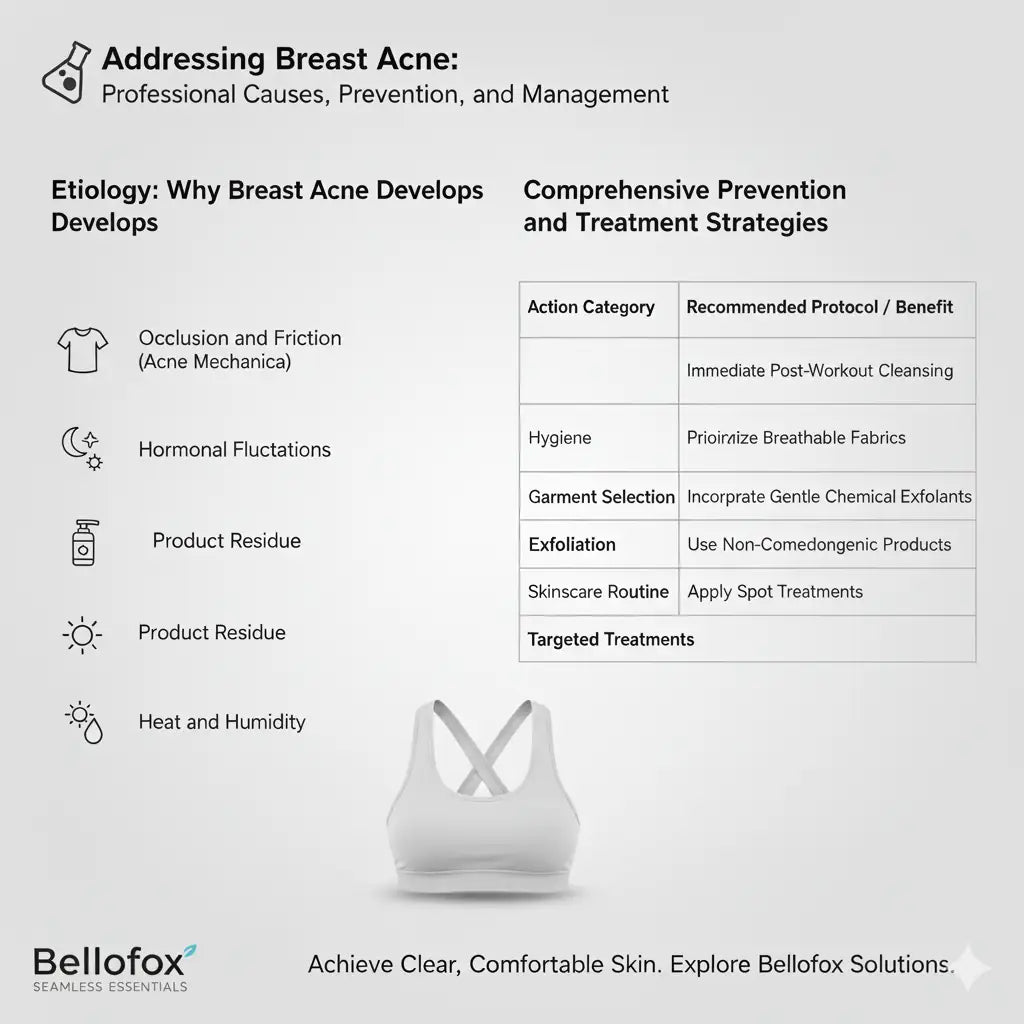
Etiology: Why Breast Acne Develops
Breakouts in this area typically arise from a combination of environmental and physiological factors:
-
Occlusion and Friction (Acne Mechanica): Prolonged wear of tight garments, such as sports bras or synthetic fabrics, creates an occlusive environment. Trapped sweat, heat, and constant friction lead to pore blockage.
-
Hormonal Fluctuations: Changes associated with the menstrual cycle, periods of high stress, or broader hormonal shifts can stimulate increased sebum (oil) production, triggering acne formation.
-
Product Residue: The application of heavy body creams, oils, or the residual runoff from hair products (like shampoos and conditioners) can deposit comedogenic substances that clog pores in the chest area.
-
Heat and Humidity: Warm, moist climates promote both perspiration and the proliferation of surface bacteria, intensifying the likelihood of breakouts.
Comprehensive Prevention and Treatment Strategies
Effective management requires a consistent, multi-step approach:
|
Action Category |
Recommended Protocol |
Benefit |
|
Hygiene |
Immediate Post-Workout Cleansing: Change out of damp, sweaty garments immediately after physical activity. Rinse the skin thoroughly to prevent sweat and cellular debris from settling in the pores. |
Keeps pores clear and minimizes bacterial load. |
|
Garment Selection |
Prioritize Breathable Fabrics: Opt for natural materials like cotton or high-performance moisture-wicking fabrics, particularly for activewear and daily undergarments. |
Reduces heat, minimizes friction, and controls moisture buildup. |
|
Exfoliation |
Incorporate Gentle Chemical Exfoliants: Use a body wash containing mild exfoliating acids, such as Salicylic Acid (Beta Hydroxy Acid) or Glycolic Acid (Alpha Hydroxy Acid), to gently slough off dead skin cells and clear pores. |
Unclogs pores and promotes healthy cell turnover. |
|
Skincare Routine |
Use Non-Comedogenic Products: Ensure all lotions, body creams, and sunscreens applied to the chest are explicitly labeled non-comedogenic. Avoid occlusive body oils in this area. |
Prevents pore obstruction caused by product ingredients. |
|
Targeted Treatment |
Apply Spot Treatments: Utilize over-the-counter acne gels containing active ingredients like Benzoyl Peroxide or apply dedicated pimple patches (which may include ingredients like Tea Tree Oil) directly to blemishes. |
Treats existing lesions and reduces inflammation. |
When to Consult a Dermatologist
If chest breakouts are persistent, characterized by pain, or fail to resolve after 4–6 weeks of consistent basic care, it is advisable to seek professional dermatological consultation. Certain conditions, such as fungal infections (Pityrosporum folliculitis), can mimic acne and require specialized diagnosis and treatment.
The Professional Conclusion:
Breast acne is a common and highly manageable skin issue, not a cause for embarrassment. Implementing simple, proactive adjustments—such as dedicated post-workout hygiene, selecting appropriate breathable fabrics, and adopting a non-comedogenic skincare regimen—will significantly contribute to clear, comfortable skin.
Would you like more recommendations for non-comedogenic body wash products?